What Episode Does Amy Have Her Baby in in Heartland
a.the fourth dimension the ambulance arrived
b.summary of events
c.the part of a big vehicle where the driver sits
d.child
e.death
f.recovery
PHONE CALLS
| 1 Log Book | Time of call: 06.l | |
| Location of emergency | 14 Friars Walk | |
| Name of caller | Staff nurse Jenny Lewis | |
| Nature of emergency | Suspected cardiac abort | |
| Synopsis | Victim is caller'south 56-year-old male neighbour. Caller reports victim has abdominal pains and is sweating and airsickness. | |
| Activeness taken | Ambulance is dispatched. ETA: 07.10 | |
| Follow-up | Heavy traffic and so ATA was 07.50. Victim DoA at hospital. | |
| 2 Log Volume | Time of phone call: 09.23 | |
| Location of emergency | 2 km due north of motorway junction 17 | |
| Nature of emergency | RTA | |
| Synopsis | Lorry driver is trapped in his cab just no other vehicles are involved | |
| Activity taken | Constabulary and fire service are notified and ambulance dispatched | |
| Follow-up | The commuter was released and transferred to hospital. He had no serious injuries and was discharged later on. | |
| iii Log Book | Fourth dimension of call: 14.20 | |
| Location of emergency | Central park north side perimeter fence | |
| Proper name of caller | Mr. Fred Thomas (park keeper) | |
| Nature of emergency | Juvenile trapped in park railings | |
| Synopsis | Victim has put her legs through railings. They have become bloated and she is unable to free herself. Caller reports no haemorrhage and the victim is fully conscious | |
| Action taken | Fire service is notified. Ambulance is dispatched. | |
| Follow-upward | Ambulance was not required. Burn officeholder used hydraulic equipment to force open up the railings and free the girl. Hospital omnipresence was non necessary. | |
| 4 Log Book | Time of call: 22.10 | |
| Location of emergency | High Street outside Lock Building | |
| Name of caller | Male person caller refuses to requite his proper noun. | |
| Nature of emergency | Possible suicide attempt | |
| Synopsis | Caller reports seeing victim jump from the roof of the building. | |
| Action taken | Ambulance is dispatched and police are notified | |
| Follow-up | Constabulary officer reported fatality. Foul play is suspected and a murder investigation has been opened. | |
| 5 Log Book | Fourth dimension of call: 00.00 | |
| Location of emergency | 332 Rio Route | |
| Name of caller | Shareen Heslop | |
| Nature of emergency | Not-emergency | |
| Synopsis | Caller reports injured wild bird | |
| Action taken | Animal rescue notified | |
| Follow-up | The bird was taken to an creature sanctuary for treatment and rehabilitation. | |
You are in a lite aircraft when it crashes into the jungle. Your radio is broken then y'all can't call for assist. At that place are two of you and yous must become ready to walk 100 kilometres to safety. Y'all already accept clothes, food, and water.
You can take only 10 more than things with you - 5 from each list. Hash out what to take with your partner and explicate your reasons.
Vocabulary
| | MEDICAL | General |
| bandages | a torch | |
| a scalpel | a box of matches | |
| a snake bite kit | soap | |
| morphine | a mirror | |
| aspirin | a compass | |
| dispensable gloves | a knife | |
| a thermometer | scissors | |
| tweezers | fish hooks | |
| a first assist transmission | big plastic numberless | |
| hypodermic needles | a cooking pot | |
| adhesive record | a mosquito net |

 Taxi drivers in Bangkok are at present being trained to assist women give birth. An estimated 300—400 women in the city give birth in taxis or tuk-tuks on the way to hospital each year.
Reading
Wait at the pictures. What practise you think the commodity is nigh?
Talk over these questions with a partner.
1. Have y'all ever helped with a birth? How was it?
two. Were you born in infirmary, at home, or somewhere else?
3. Have you heard of any births that happened in an unusual place?
Read the text and answer the questions.
ane. Was this Clive'southward first experience of a nativity?
ii. Who gave instructions to Clive ?
3. Who is Mohammed Clive ?
4. How is the baby now?
Work in pairs. Cover the article. Can you remember the midwife's instructions? Await at the words below to assistance you remember.
| mother'southward chest | olfactory organ and mouth | umbilical string |
| medical help | dorsum | head |
| blanket | towel |
British taxi driver, Clive Lawrence, became a midwife for an hour when a rider gave nascency to a baby in the back of his taxi.
Asha Gemechu's infant was due in a month, merely when her contractions started she called for a taxi to take her to hospital. Mr. Lawrence answered the phone call.
The expectant mum was in the taxi for ten minutes when she realized that things were happening besides fast. The infant was non going to wait. Its head appeared, and Mr. Lawrence stopped the taxi to assistance with the birth.
Mr. Lawrence said, 'I was there when my kids were built-in, so this was non completely new for me. I spoke to a nurse on the taxi radio and she gave me instructions - I simply did what she told me. There's nothing special about that. I minute I had i passenger, then I had 2, but at that place'south no extra charge!''
A midwife at the hospital said, 'Giving birth on the style to infirmary doesn't happen often, but if you lot're there when it does, only support the babe'due south head and guide it out - don't pull. Then clean the baby'southward nose and mouth, but don't cut the umbilical string - just lay the infant on the mother'south chest, cord and all. Dry the infant with a clean towel or cloth, gently rub its back, then cover mum and baby with a dry blanket to go on them both warm, and wait for medical help to arrive.'
'Clive was wonderful,' the mother said subsequently, 'he did everything right.'
Asha is naming the infant Mohammed Clive. Female parent and infant are both doing well.
Writing
Blow report
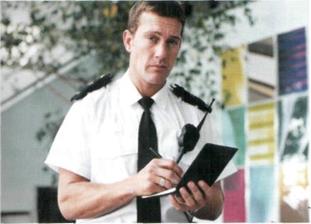
1. Heed to a police officeholder talk to a nurse virtually the RTA in Listening. Take notes most what happened.
2. Write a report almost the accident. Describe what happened (draw a diagram if necessary).
Include in the study your own opinion nearly whether or not the commuter should have been driving. Say what, if annihilation, could have been done to avoid the accident. Make recommendations for what should be done to reduce the number of RTAs in your country.
It's my job
Without looking at the list of abbreviations say which of these abbreviations medical problems are and which are medical staff.
Fx SHO S/N CVA
Read the text and answer the questions.
i. Why does Heidi not mind the stress of her job?
2. Why is 'triage nurse' a suitable chore championship?
3. What is Heidi's rank?
iv. What is the A&Eastward dr.'s rank?
5. What does Heidi like all-time near the job?
six. Why will the patient with the eye trouble not exist keeping his medicines in his desk-bound drawer in hereafter?
Have yous heard any stories of foreign or stupid accidents and emergencies? Tell your partner.
Heidi Vettraino
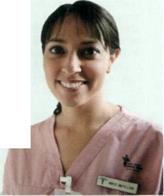
A repetitive job is my idea of a nightmare, which is why I piece of work in A&E. It's stressful, sometimes shocking, and often very upsetting, just I wouldn't alter information technology for anything.
I specialize in emergency triage. 'Triage' ways 'sorting' and that'south what I practice. I sort out patients in A&Due east according to the nature and severity of their illness so that the doctors see the about severe cases outset and we don't waste material precious time on non-emergencies. You could say that's similar specializing in everything. You don't know what's going to pop upward next - it could be an blow with multiple Fx, a ill baby, or a CVA. The day earlier yesterday a farming accident came in - a man had cut his manus off with a chainsaw.

When the ambulance brought the patient in, he was haemorrhaging badly and we had to open up an airway and get him on a ventilator immediately. He'due south OK. He'due south in ICU, only not on the critical list whatever more.
That was the same day a woman came in complaining of terrible pain in her feet. I was the S/N on duty and I categorized her equally a non-emergency. She sabbatum waiting for four hours before finally seeing the SHO. You'll never gauge what the problem was. Her shoes were too tight!
The best thing about A&Due east work is the people yous piece of work with. Everyone pulls together, nosotros're all equal, and anybody shares the same sense of humour, which is essential. Sometimes you've got to run across the funny side or give up all promise for homo beings. Last week, for example, an ambulance brought a homo in who was unable to open his eyes. Being short-sighted, he had reached for his eye drops and didn't see that he had picked upwards a tube of superglue instead. Poor human!
We bathed his eyes for an 60 minutes and very slowly separated his
eyelids. He was able to laugh nearly information technology with the A&E staff afterwards,
but in the future he won't be keeping his medicines in his desk drawer.
In 1917, an Australian outback farmer seriously injured himself in a autumn. Because the nearest doc was 3,000 km abroad, the local postmaster operated on the farmer'south bladder using a penknife whilst receiving Morse code instructions past telegraph. The patient survived the operation, but not the journey to hospital later.
What famous Australian medical service was created considering of incidents like this?
Reading
Air ambulance
Talk over with a partner the advantages of air ambulances like the 1 in the picture.
Read the text and compare your ideas with what the article says.
Read the text again and choose the correct respond.
1. The thought of an air ambulance came from the need to
a. limit a patient's movements
b. move treatment fast to sick people
c. move patients fast merely gently.
2. Letting wounded soldiers dice is
a. cheaper than evacuating them by helicopter
b. economically necessary
c. inefficient.
- The first medical rescue past helicopter was
a. a response to an accident
b. a armed services exercise
c. later a battle.
- The equipment in a Sikorsky YR-4 helicopter is
a. uncomplicated
b. sophisticated
c. complex.
- The master problem for helicopter pilots is that they
a. cannot run into where they are flight
b. cannot fly when they cannot see
c. cannot use VFR.
- Air ambulances are best employed for patients who
a. are not-emergencies
b. volition probably dice
c. may alive.
Rescue from the Air
When you cannot move treatment chop-chop to ill people, yous have to move sick people apace to treatment. The problem is that when someone is severely injured, movement can kill and so anything that can both speed up the journey and minimize the shock is a life-saver. This is why, over a hundred years ago, a long time before the development of aircraft, someone came up with a pattern for an 'air ambulance'. The idea was to put wounded people on a stretcher which was held in the air by balloons and pulled along by horses. Warfare has encouraged progress in ambulance technology. It is expensive and wasteful to allow soldiers dice on a battleground and saving their lives justifies the expense of using aircraft (particularly helicopters) to send casualties to infirmary. In fact, the first fourth dimension a helicopter was used for a medical rescue was in Burma in 1945 by the American military. A soldier on a jungle-covered mountain accidentally shot himself with a machine gun. There were no medics and the expanse was so wild that information technology would have taken ten days for a rescue party to reach the wounded man. A Sikorsky YR-four helicopter - very basic by modern standards - was sent out. It had no radio and navigated by flight low over the treetops, but the pilot completed his mission and the soldier's life was saved.
 Even today, helicopters are limited by weather and darkness. Unlike aeroplanes, which have radar and computers, many helicopters have only essential flying equipment and pilots accept to fly VFR (Visual Flight Rules) which means they can only fly when they tin meet. However, the neat value of a helicopter is that information technology can land and take off vertically and provide speed and comfort, which are non luxuries when information technology comes to saving lives and a helicopter can make a huge difference in a rural expanse where response fourth dimension is normally slow. Air ambulances can increase the chances of survival of patients whose injuries are severe but survivable; an important factor to consider when sending one out.
a.the time the ambulance arrived
b.summary of events
c.the part of a large vehicle where the driver sits
d.child
due east.expiry
f.recovery
PHONE CALLS
| i Log Volume | Time of call: 06.50 | |
| Location of emergency | fourteen Friars Walk | |
| Proper noun of caller | Staff nurse Jenny Lewis | |
| Nature of emergency | Suspected cardiac arrest | |
| Synopsis | Victim is caller'due south 56-year-onetime male neighbour. Caller reports victim has intestinal pains and is sweating and airsickness. | |
| Action taken | Ambulance is dispatched. ETA: 07.x | |
| Follow-up | Heavy traffic and and then ATA was 07.l. Victim DoA at infirmary. | |
| ii Log Volume | Time of call: 09.23 | |
| Location of emergency | ii km n of motorway junction 17 | |
| Nature of emergency | RTA | |
| Synopsis | Lorry driver is trapped in his cab but no other vehicles are involved | |
| Action taken | Police force and fire service are notified and ambulance dispatched | |
| Follow-up | The driver was released and transferred to hospital. He had no serious injuries and was discharged later. | |
| 3 Log Book | Fourth dimension of call: fourteen.20 | |
| Location of emergency | Central park north side perimeter contend | |
| Name of caller | Mr. Fred Thomas (park keeper) | |
| Nature of emergency | Juvenile trapped in park railings | |
| Synopsis | Victim has put her legs through railings. They take become swollen and she is unable to free herself. Caller reports no bleeding and the victim is fully conscious | |
| Action taken | Fire service is notified. Ambulance is dispatched. | |
| Follow-up | Ambulance was not required. Fire officeholder used hydraulic equipment to force open the railings and free the daughter. Infirmary omnipresence was not necessary. | |
| 4 Log Volume | Time of call: 22.x | |
| Location of emergency | High Street outside Lock Building | |
| Proper noun of caller | Male caller refuses to give his proper name. | |
| Nature of emergency | Possible suicide endeavor | |
| Synopsis | Caller reports seeing victim jump from the roof of the building. | |
| Action taken | Ambulance is dispatched and police force are notified | |
| Follow-up | Police force officer reported fatality. Foul play is suspected and a murder investigation has been opened. | |
| 5 Log Book | Fourth dimension of call: 00.00 | |
| Location of emergency | 332 Rio Road | |
| Name of caller | Shareen Heslop | |
| Nature of emergency | Non-emergency | |
| Synopsis | Caller reports injured wild bird | |
| Action taken | Animate being rescue notified | |
| Follow-upward | The bird was taken to an animal sanctuary for treatment and rehabilitation. | |
Yous are in a calorie-free shipping when it crashes into the jungle. Your radio is cleaved so you can't call for aid. There are ii of yous and y'all must get ready to walk 100 kilometres to safety. You already have clothes, food, and water.
Yous can take only ten more things with you - 5 from each list. Discuss what to take with your partner and explain your reasons.
Vocabulary
| | MEDICAL | GENERAL |
| bandages | a torch | |
| a scalpel | a box of matches | |
| a snake bite kit | soap | |
| morphine | a mirror | |
| aspirin | a compass | |
| disposable gloves | a pocketknife | |
| a thermometer | scissors | |
| tweezers | fish hooks | |
| a showtime aid transmission | large plastic bags | |
| hypodermic needles | a cooking pot | |
| adhesive tape | a mosquito net |
Taxi drivers in Bangkok are now being trained to help women requite nascency. An estimated 300—400 women in the city give birth in taxis or tuk-tuks on the style to hospital each year.
Reading
Look at the pictures. What practise you retrieve the article is almost?
Discuss these questions with a partner.
1. Have yous always helped with a nativity? How was it?
2. Were you born in infirmary, at home, or somewhere else?
iii. Take you heard of any births that happened in an unusual place?
Read the text and answer the questions.
1. Was this Clive'due south kickoff experience of a birth?
2. Who gave instructions to Clive ?
3. Who is Mohammed Clive ?
4. How is the baby now?
Work in pairs. Embrace the article. Can you remember the midwife's instructions? Look at the words beneath to assist yous recollect.
| mother'due south chest | nose and mouth | umbilical cord |
| medical help | back | head |
| blanket | towel |
British taxi driver, Clive Lawrence, became a midwife for an 60 minutes when a rider gave birth to a infant in the back of his taxi.
Asha Gemechu's baby was due in a month, but when her contractions started she called for a taxi to take her to infirmary. Mr. Lawrence answered the call.
The expectant mum was in the taxi for ten minutes when she realized that things were happening too fast. The baby was not going to wait. Its head appeared, and Mr. Lawrence stopped the taxi to aid with the birth.
Mr. Lawrence said, 'I was there when my kids were born, so this was not completely new for me. I spoke to a nurse on the taxi radio and she gave me instructions - I merely did what she told me. There'southward nothing special about that. 1 minute I had one passenger, then I had two, but there's no extra charge!''
A midwife at the hospital said, 'Giving birth on the way to hospital doesn't happen often, but if you're there when it does, only support the baby's caput and guide information technology out - don't pull. Then clean the baby's nose and mouth, but don't cut the umbilical cord - merely lay the baby on the mother'south chest, cord and all. Dry the baby with a clean towel or fabric, gently rub its back, and then cover mum and baby with a dry coating to go along them both warm, and wait for medical assist to arrive.'
'Clive was wonderful,' the mother said subsequently, 'he did everything right.'
Asha is naming the baby Mohammed Clive. Female parent and baby are both doing well.
Writing
Accident study
1. Heed to a police officer talk to a nurse about the RTA in Listening. Take notes near what happened.
2. Write a report most the blow. Describe what happened (describe a diagram if necessary).
Include in the report your own opinion nigh whether or not the driver should have been driving. Say what, if annihilation, could take been done to avert the accident. Make recommendations for what should be done to reduce the number of RTAs in your country.
It'south my job
Without looking at the list of abbreviations say which of these abbreviations medical issues are and which are medical staff.
Fx SHO S/N CVA
Read the text and respond the questions.
one. Why does Heidi non mind the stress of her job?
2. Why is 'triage nurse' a suitable chore title?
3. What is Heidi's rank?
iv. What is the A&Due east dr.'s rank?
five. What does Heidi similar all-time well-nigh the job?
6. Why will the patient with the eye problem not be keeping his medicines in his desk drawer in future?
Have you heard any stories of strange or stupid accidents and emergencies? Tell your partner.
Heidi Vettraino
A repetitive task is my idea of a nightmare, which is why I piece of work in A&E. It's stressful, sometimes shocking, and frequently very upsetting, but I wouldn't alter information technology for annihilation.
I specialize in emergency triage. 'Triage' means 'sorting' and that's what I do. I sort out patients in A&E according to the nature and severity of their illness so that the doctors see the well-nigh severe cases get-go and we don't waste matter precious fourth dimension on non-emergencies. You lot could say that'southward like specializing in everything. Yous don't know what'due south going to pop upward adjacent - it could be an accident with multiple Fx, a sick infant, or a CVA. The day before yesterday a farming accident came in - a man had cutting his manus off with a chainsaw.
When the ambulance brought the patient in, he was haemorrhaging badly and we had to open upwards an airway and get him on a ventilator immediately. He's OK. He's in ICU, simply not on the critical list whatsoever more.
That was the aforementioned twenty-four hours a adult female came in lament of terrible pain in her feet. I was the Southward/Due north on duty and I categorized her as a non-emergency. She saturday waiting for four hours before finally seeing the SHO. Yous'll never guess what the problem was. Her shoes were likewise tight!
The all-time thing about A&E work is the people you work with. Everyone pulls together, we're all equal, and everyone shares the same sense of humour, which is essential. Sometimes you've got to see the funny side or give upwards all hope for man beings. Last calendar week, for case, an ambulance brought a man in who was unable to open his optics. Existence brusk-sighted, he had reached for his eye drops and didn't run into that he had picked upwardly a tube of superglue instead. Poor man!
Nosotros bathed his eyes for an hour and very slowly separated his
eyelids. He was able to laugh well-nigh it with the A&Due east staff afterwards,
only in the future he won't be keeping his medicines in his desk-bound drawer.
In 1917, an Australian outback farmer seriously injured himself in a fall. Because the nearest physician was 3,000 km abroad, the local postmaster operated on the farmer's bladder using a penknife whilst receiving Morse code instructions by telegraph. The patient survived the performance, but not the journeying to hospital after.
What famous Australian medical service was created because of incidents like this?
Reading
Air ambulance
Discuss with a partner the advantages of air ambulances similar the one in the moving picture.
Read the text and compare your ideas with what the article says.
Read the text over again and choose the correct respond.
1. The idea of an air ambulance came from the demand to
a. limit a patient'southward movements
b. motion treatment fast to sick people
c. move patients fast merely gently.
ii. Letting wounded soldiers dice is
a. cheaper than evacuating them by helicopter
b. economically necessary
c. inefficient.
- The start medical rescue past helicopter was
a. a response to an accident
b. a armed services exercise
c. after a boxing.
- The equipment in a Sikorsky Twelvemonth-four helicopter is
a. elementary
b. sophisticated
c. complex.
- The main problem for helicopter pilots is that they
a. cannot encounter where they are flying
b. cannot fly when they cannot meet
c. cannot use VFR.
- Air ambulances are best employed for patients who
a. are non-emergencies
b. will probably die
c. may live.
Rescue from the Air
When you cannot move treatment quickly to sick people, you have to motility sick people chop-chop to handling. The trouble is that when someone is severely injured, movement can kill and so anything that tin both speed upwards the journey and minimize the stupor is a life-saver. This is why, over a hundred years ago, a long fourth dimension before the development of aircraft, someone came upwardly with a design for an 'air ambulance'. The idea was to put wounded people on a stretcher which was held in the air by balloons and pulled along past horses. Warfare has encouraged progress in ambulance applied science. It is expensive and wasteful to allow soldiers die on a battlefield and saving their lives justifies the expense of using aircraft (specially helicopters) to transport casualties to hospital. In fact, the beginning time a helicopter was used for a medical rescue was in Burma in 1945 by the American armed services. A soldier on a jungle-covered mountain accidentally shot himself with a machine gun. There were no medics and the area was and so wild that information technology would have taken ten days for a rescue party to reach the wounded homo. A Sikorsky Yr-iv helicopter - very basic by modernistic standards - was sent out. Information technology had no radio and navigated by flying low over the treetops, but the pilot completed his mission and the soldier's life was saved.
Even today, helicopters are limited past atmospheric condition and darkness. Unlike aeroplanes, which have radar and computers, many helicopters have only essential flight equipment and pilots have to fly VFR (Visual Flight Rules) which means they can only fly when they tin meet. However, the swell value of a helicopter is that it tin land and take off vertically and provide speed and comfort, which are non luxuries when it comes to saving lives and a helicopter can make a huge divergence in a rural area where response fourth dimension is normally slow. Air ambulances can increase the chances of survival of patients whose injuries are severe merely survivable; an important factor to consider when sending i out.
Source: https://studopedia.ru/22_57607_Find-words-and-abbreviations-in-the-log-that-mean.html
0 Response to "What Episode Does Amy Have Her Baby in in Heartland"
Post a Comment